


Why I Chose to End Julia This Way | A Psychological Horror Novel That Stays With You
- Manuel Sabater Romero
- May 6, 2025
- 2 min read

By Manuel Sabater Romero
There’s something about the quiet after a storm that unsettles me more than the storm itself. That’s the kind of feeling I wanted to leave readers with in Julia. Not shock. Not gore. But silence—unanswered, watching, still breathing behind the door.
I’ve always believed that true psychological horror doesn’t end when the book does. It lingers. It loops. It leaves you wondering whether the story is really over… or whether it’s still happening—just elsewhere, or worse, inside you.
Julia is not just a psychological horror novel—it’s an experience built to linger long after the final page. I didn’t want a story that simply scares; I wanted one that haunts, that questions memory, identity, and trust.
As I wrote Julia, I focused on the internal unraveling of the mind. That’s the power of the psychological horror novel: it doesn’t need jump scares. It leans into silence, suggestion, and the terrifying possibility that what we remember might be wrong.
The ending, especially, was never meant to wrap things up neatly. That’s not what this genre demands. A true psychological horror novel leaves something behind—in your thoughts, in your dreams, in the quiet moments where a detail resurfaces and makes you doubt what you read… or what you remember.

The Mind as a Haunted House
Julia was born from a single question: What if your mind is the most unreliable place in the world—but it’s the only place you have left to run? From that seed, the story unfolded—not in a straight line, but like a broken mirror reflecting pieces of something half-remembered. I wanted readers to question everything, just as Julia does. I wanted them to feel her descent, not just observe it.
Throughout the novel, I played with distorted memory, looping symbols, and shifting identities. But I knew from the beginning: this wouldn’t be a story with a neat resolution. Julia wasn’t written to comfort. It was written to disturb gently—and truthfully.
Writing the Ending That Won’t Let Go
I won’t spoil it here, but I will say this: the ending of Julia isn’t meant to answer every question. It’s meant to reframe all the ones you’ve been asking. There’s a moment—quiet, almost forgettable—where everything tilts, and you realise the horror was never behind you. It’s been waiting.
Why write it this way? Because horror, at its best, doesn’t scream. It whispers. It taps gently on the wall and waits for you to lean in. I wanted to leave the door cracked just wide enough for something to step through.
A Final Word (Or Is It?)
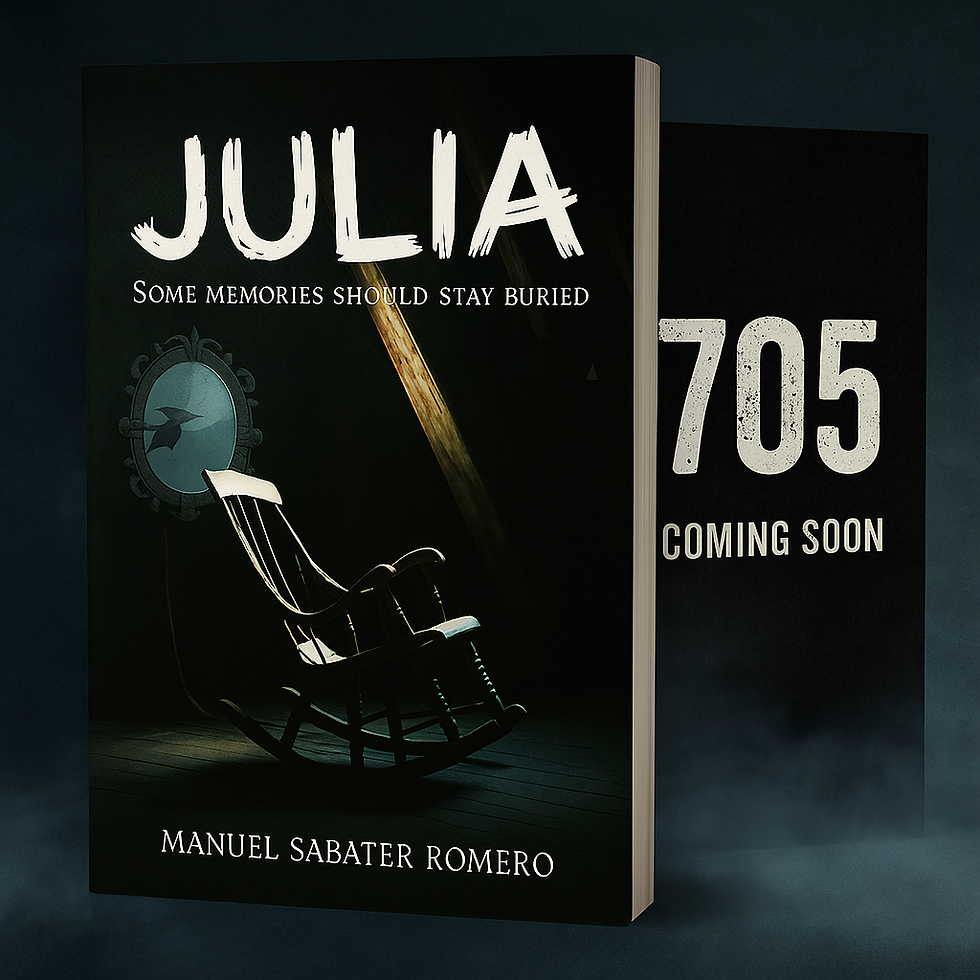
If you finished the book and you’re still thinking about the chair, the rosary, or what really happened by the river… good. That means it worked. That means the story hasn’t quite let you go. And maybe it won’t.
Thank you for reading Julia. And remember:
Some doors never close. They just wait.
Comments