


Julia Psychological Horror Symbolism: The Chair, the Photo, the Truth
- Manuel Sabater Romero
- May 13, 2025
- 2 min read

The Power of Julia’s Psychological Horror Symbolism
Some memories should stay buried… but what about the ones that never happened?
There’s something uniquely unsettling about objects in horror. Not haunted houses or howling monsters—but the quiet things. The things that shouldn’t matter… but won’t go away. In crafting Julia, I was drawn to the quiet terror found in objects we overlook—symbols that grow heavier the longer we stare. This is the heart of Julia’s psychological horror symbolism: the chair, the photo, the rosary—each an anchor to memory, identity, and buried truth. Rather than rely on spectacle, the story leans into suggestion. What’s real? What’s imagined? And what does the stillness of a rocking chair say about a mind in freefall?
In Julia, a chair appears. Plain, wooden, old-fashioned. Nothing threatening—until it shows up where it shouldn’t. Until it rocks without wind. Until it moves inside a photograph that’s been untouched for years.
And that’s the heart of this story.
Not jump scares. Not gore. But discomfort. Subtle distortions that unravel the rules we trust: Time. Memory. Reality.

The Chair
Readers often ask: Why a chair?
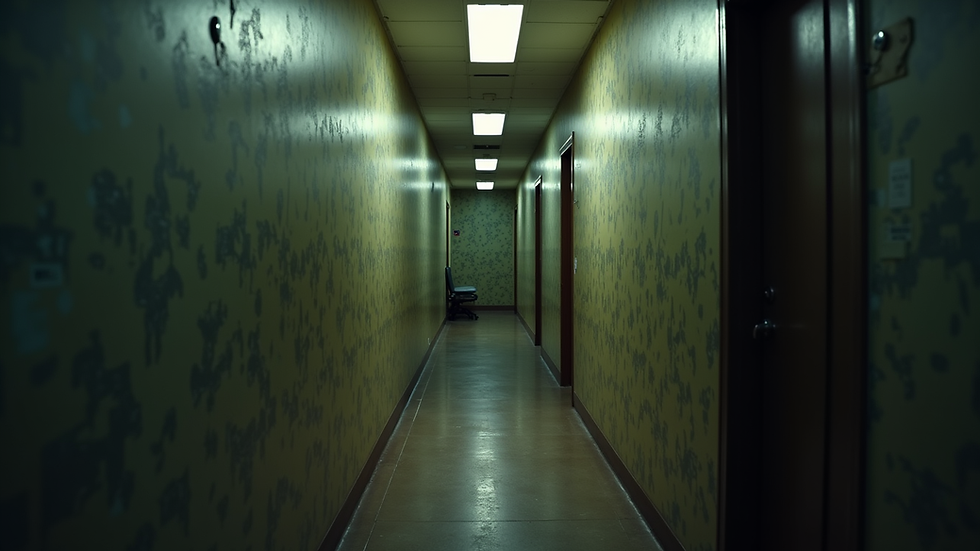
Because it’s ordinary. Universal. Domestic. We sit in them. We place them in corners and forget about them. So when one becomes threatening—without ever moving, without ever speaking—it taps into a very different fear. Not of what’s in the dark… but of what’s been sitting in plain sight the whole time.
The Photograph
Then there’s the photo. The one Julia finds of a girl who looks like Lila—until she turns it over. Until she sees her own name.
Photos are supposed to tell the truth. But what if they lie? What if they show us things we know didn’t happen—but the evidence is there, printed, fading, real?
The photo, like the chair, doesn’t explain itself. It simply is. And in a story like Julia, that’s far more terrifying than anything with fangs.
The Truth
None of these symbols exist just for effect. They’re mirrors—distorted ones. They reflect Julia’s past, her fractured mind, her search for identity.
And maybe they reflect something deeper in all of us.
The fear that the stories we tell ourselves—about who we are, what we’ve survived—might not be entirely true. Or worse… might not be ours.
If you've read Julia, I’d love to hear from you:Which symbol stayed with you? The chair? The envelope? The photo?
Drop a comment or find me on Goodreads. And if you haven’t entered Julia’s world yet—there’s still time.
But don’t be surprised if something’s waiting in the corner when you turn the last page.


Comments